Macintosh System Software

Dec 28, 2014. Apple System Software Recovery 2 CD Will Start Up: All Power Macintosh G3 and iMac computers introduced before July 1999.
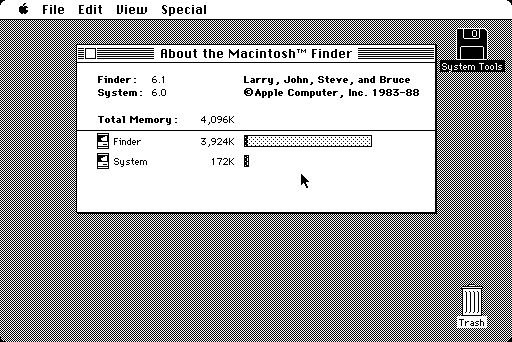
As of Mac OS 8, Appledistributes its system software on CD-ROM only. Earlier versions wereavailable on both CD-ROM and floppy disks. The instructions belowcover installation using either type of media. If you have an olderMac OS computer, see ARCHIVED: For my older Macintosh computer, where can I get system software? If you are installing MacOS X, see ARCHIVED: How do I install or upgrade Mac OS X 10.6 (Snow Leopard)?
To install Mac OS:
- Boot up with the CD-ROM or, if you have the system on floppydisks, the System Tools disk.
For instructions on how to boot from a CD-ROM, see ARCHIVED: On a Mac, how do I change my startup volume or boot from analternative volume, disc, or device?
To boot from a floppy disk, shut down the computer and insert theSystem Tools disk or the first installation disk. When you restart thecomputer, it should boot from the floppy.
Note: If you have downloaded a Net Install of System7.5.3 for an older computer from Apple, you should also download theNetwork Access disk image, so-called because it contains aSystem Folder and the minimum software needed to make anetwork connection. You will need Disk Copy to convert thedisk image into a boot-up floppy. Apple recommends you boot from sucha floppy before running a Net Install of System 7.5.3.
- Run Disk First Aid on the volume on which you will beinstalling the Mac OS. In older versions of the system software, DiskFirst Aid is on the Disk Tools or System Tools disk, while in newerversions it is in a folder named
Utilitieson the CD-ROM.Newer Mac OS installers automatically check the disk as part of theinstallation process. - Double-click the installer program. In the Mac OS 7.6 through 9installers, you will need to click Continue on the firstscreen and then select the drive you want to install to on the secondscreen. For earlier installers, click OK in thedialog box telling you what you are about to do. If installing from aCD-ROM, make sure you select the volume on which you want the systemto be installed.
- There are various types of installation from which to choose.Choose the method that best suits your situation. If you already haveMac OS 7.6 through 9 installed, the installers for these systems willdetect that and give you the options Reinstall andAdd/Remove. Other options are as follows:
- Easy Install will install the default system (the systemfor that particular computer) and all printer software.
- Custom Install allows you to specify a systemconfiguration other than the default. You can choose to install aversion configured for the particular Macintosh model you have or onethat will work with any model. You can also choose a minimal systemconfiguration that does not install some optional components of thesystem, or you can separately specify what networking software,multimedia support software, specific printers drivers, etc., toinstall.
- Custom Remove allows you to remove selected systemcomponents from the system. Make sure the applications you are usingdon't require these components before removing them.
- Clean Install creates a brand new
SystemFolder. The oldSystem Folderis renamedPrevious System Folder. For instructions on performingthis type of installation, consult ARCHIVED: In Mac OS 9.x and earlier, what is a clean system install, and how canI do it?
- Once the installer has finished updating or installing youroperating system, restart your computer. You should then install anyupdates to the operating system; see ARCHIVED: For Mac OS X, how do I obtain and install system softwareupdates?
Is your Mac up to date with the latest version of the Mac operating system (macOS or OS X)? Is it using the version required by some other product that you want to use with your Mac? Which versions are earlier (older) or later (newer, more recent)? To find out, learn which version is installed now.
If your macOS isn't up to date, you may be able to update to a later version.
Which macOS version is installed?
Apple Macintosh Software
From the Apple menu in the corner of your screen, choose About This Mac. You should see the macOS name, such as macOS Mojave, followed by its version number. If you need to know the build number as well, click the version number to see it.
This example shows macOS Catalina version 10.15 build 19A583.
Which macOS version is the latest?
These are all Mac operating systems, starting with the most recent. When a major new macOS is released, it gets a new name, such as macOS Catalina. As updates that change the macOS version number become available, this article is updated to show the latest version of that macOS.
If your Mac is using an earlier version of any Mac operating system, you should install the latest Apple software updates, which can include important security updates and updates for the apps that are installed by macOS, such as Safari, Books, Messages, Mail, Music, Calendar, and Photos.
Macintosh System 7 Phone Answering Software
| macOS | Latest version |
|---|---|
| macOS Catalina | 10.15.7 |
| macOS Mojave | 10.14.6 |
| macOS High Sierra | 10.13.6 |
| macOS Sierra | 10.12.6 |
| OS X El Capitan | 10.11.6 |
| OS X Yosemite | 10.10.5 |
| OS X Mavericks | 10.9.5 |
| OS X Mountain Lion | 10.8.5 |
| OS X Lion | 10.7.5 |
| Mac OS X Snow Leopard | 10.6.8 |
| Mac OS X Leopard | 10.5.8 |
| Mac OS X Tiger | 10.4.11 |
| Mac OS X Panther | 10.3.9 |
| Mac OS X Jaguar | 10.2.8 |
| Mac OS X Puma | 10.1.5 |
| Mac OS X Cheetah | 10.0.4 |